
Choosing a nursery is one of the first big decisions you make on your child’s behalf, and we know it does not always feel straightforward.
There are nursery websites to compare, fees to understand, Ofsted reports to read and recommendations from friends and family to consider. But underneath all of that is usually one much simpler question: will my child be happy there?
At Flower Pots, we have welcomed hundreds of families through our doors, and we know that every parent approaches this decision slightly differently. Some are looking for a nursery close to home or work. Others are focused on the environment, learning opportunities or the people who will be caring for their child each day.
Knowing how to choose a nursery becomes much easier once you understand what genuinely matters and which questions are worth asking.
There is also no single nursery that will be right for every child. A busy, lively environment may be perfect for one little one, while another may feel more settled somewhere calmer. You know your child better than anyone, so your own instincts should always be part of the decision.
At our nurseries in Hemel Hempstead, St Albans, Watford and the surrounding areas, we encourage families to visit us, spend time in the rooms, meet our teams and ask as many questions as they need to.
The parents who leave feeling most confident are usually the ones who have taken the time to see the nursery for themselves.

How To Choose A Nursery: A Guide For Parents
- Where To Start When Looking For A Nursery
- What To Look For When Choosing A Nursery
- Questions To Ask When Choosing A Nursery
- Understanding Nursery Fees And Funding
- Why Visiting In Person Matters Most
- Frequently Asked Questions About Choosing A Nursery

Where To Start When Looking For A Nursery
We always recommend starting with the practical side of nursery life.
Think about what your normal week actually looks like. Would a nursery close to home make mornings easier, or would somewhere closer to work be more convenient?
It can help to think beyond the perfect day too. Consider traffic, collection times, different working patterns and what happens when your routine changes unexpectedly.
Talking to other parents can also be incredibly helpful. Friends with young children, baby classes, parent and toddler groups and local community pages can all provide first-hand experiences of nurseries near you.
We are proud when Flower Pots families recommend us to other parents because they have experienced nursery life with us themselves. However, we would always encourage you to visit any nursery you are considering rather than relying solely on someone else’s experience.
It is also important to look at each nursery’s inspection history. Every registered setting in England has a report available through Ofsted, covering areas including quality of education, behaviour, personal development and leadership.
Childcare funding is another consideration worth looking into early. Depending on your circumstances, you may be entitled to funded childcare hours. The government’s funded childcare guidance is a useful place to check what support may be available.
You can also learn a lot from your very first interaction with a nursery.
- Did the person you spoke to sound friendly and interested?
- Were they happy to answer your questions?
- Did they help you arrange a visit that worked around your family?
At Flower Pots, we want families to feel welcome from their very first conversation with us. Choosing childcare is a big decision, so there should always be space to ask questions before you make it.

What To Look For When Choosing A Nursery
When you visit a nursery, look beyond the brochure and take in what is happening around you. Watch the children, the team and how the space feels.
Do the children seem settled and comfortable? Are they exploring, playing and confidently approaching the adults around them?
Pay attention to how staff interact with the children too. Warm, responsive relationships matter, whether that is joining in with an activity, speaking at a child’s level or noticing when they need a little reassurance.
The overall atmosphere is just as important. We aim to create calm, welcoming environments where children feel comfortable exploring and being themselves.
Our rooms are carefully planned around different stages of development, with age-appropriate spaces and resources that encourage children to learn through play.
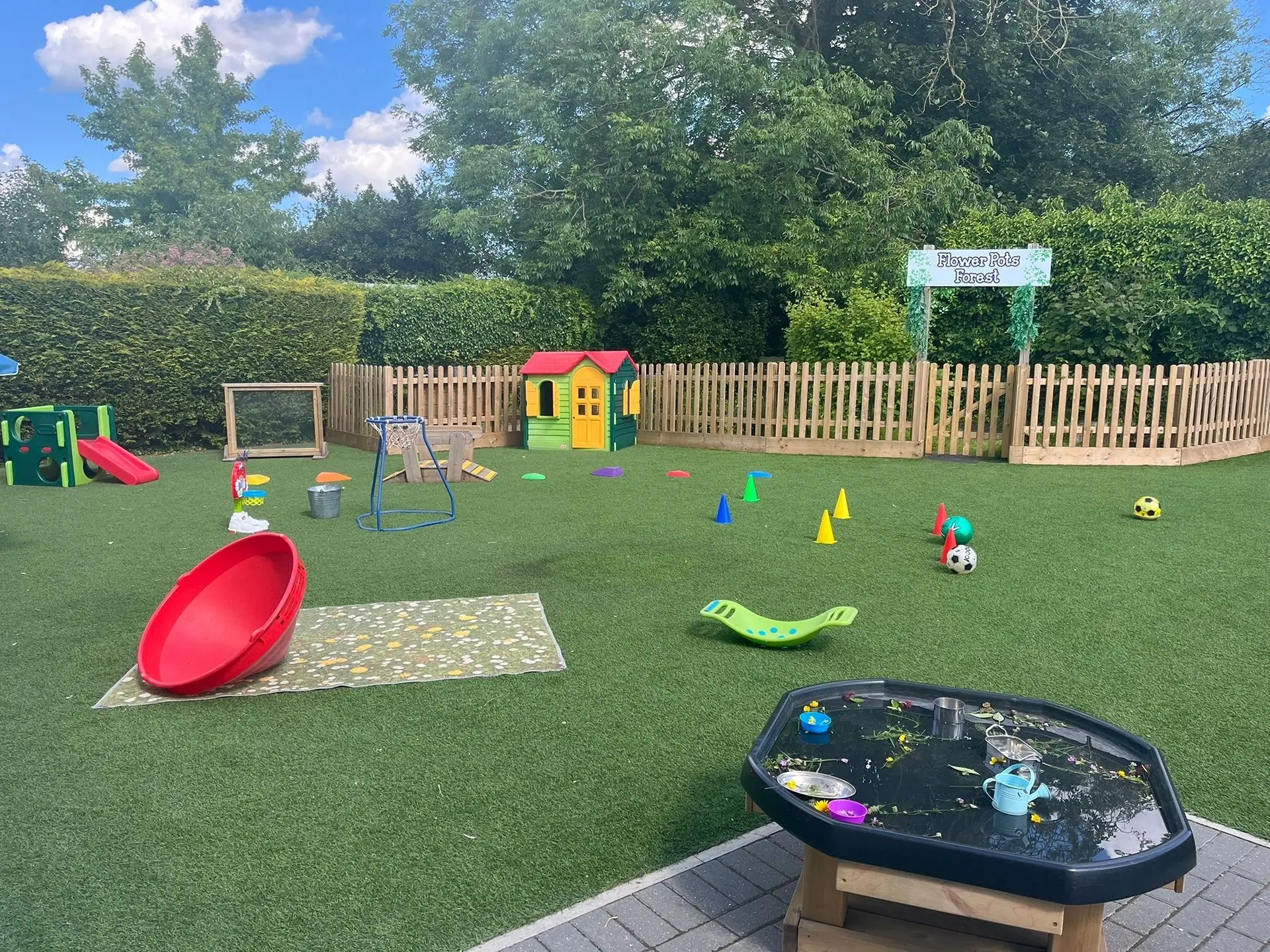
Outdoor space is another important consideration. Children should have regular opportunities to explore outside, develop physical skills and enjoy fresh air, whatever the weather.
Look at the activities and resources available too. Sand, water, messy play, books, construction and imaginative play can all encourage curiosity and natural learning.
Our guide to what sensory play is and why it matters in early years development explains why these experiences can be so valuable.
Activities such as play dough, puzzles, drawing and threading can also support coordination, confidence and independence. You can find more ideas in our guide to fine motor skill activities for children aged 1–5.
Some of the things we recommend looking out for during your visit include:
Children who appear happy, comfortable and engaged
Staff who interact warmly with children
Opportunities for outdoor play
Age-appropriate activities and resources
Clean, secure and welcoming spaces
Clear safeguarding and entry procedures
An environment where you can picture your own child feeling settled
A good nursery should also be happy to explain its policies around safeguarding, medication, illness and emergencies, helping you feel confident about how your child will be cared for.

Questions To Ask When Choosing A Nursery
Take a list of questions with you when you visit. It is easy to forget something in the moment, and at Flower Pots Day Nurseries, we are always happy for parents to ask as much as they need to.
Start by thinking about your child’s day. Ask who their key person will be, what a typical day looks like and how the team supports children who may need extra reassurance when settling in.
At Flower Pots, every child has a named key person who takes the time to get to know them. This helps create familiarity, consistency and trust from the very beginning.
It is also useful to ask how you will hear about your child’s day. Knowing what they have eaten, whether they have slept and what they have enjoyed can help you feel connected.
Flower Pots parents receive regular updates, photos and observations through our parent app. This gives families an insight into what their child has been learning and enjoying.
Questions about the nursery team are just as important. Ask about staff qualifications, experience and how long practitioners have worked at the setting.
It is also worth asking whether the nursery has a designated SENCO and what support is available if your child ever needs additional help.
You should also cover the practical side, including opening hours, fees, funded childcare entitlements and how allergies, illness and medication are managed.
Useful questions to take with you include:
Who will my child’s key person be?
What does a typical day look like here?
How do you help children settle into nursery?
How will I hear about my child’s day?
What qualifications do members of the team have?
Is there a SENCO, and how is additional support arranged?
What are your opening hours?
What is included within the nursery fees?
Which funded childcare entitlements do you accept?
How are allergies, illness and medication managed?
At Flower Pots, every child has a named key person, meals are freshly prepared each day by our in-house chefs and parents receive updates through our parent app.
You can also find answers to some of the questions families ask us most often on our FAQs page.

Understanding Nursery Fees And Funding
Nursery fees are an important part of choosing childcare, but we know they can sometimes feel awkward to discuss. At Flower Pots Day Nurseries, we want families to understand the costs and support available from the beginning.
When comparing nurseries, ask exactly what the advertised fee includes. Two settings may have similar daily rates but include different things, such as meals, snacks or other essentials.
It is also worth asking about registration fees, deposits, notice periods and any additional costs. Having a clear picture from the start makes it easier to compare your options.
You should also check what funded childcare support you may be entitled to. Eligible working parents in England can access up to 30 funded hours a week from nine months old until their child starts school, depending on their circumstances.
You can find more information about funded childcare and eligibility through Working Families. Checking your entitlement early can help you understand what your childcare costs may look like.
At Flower Pots, we accept funded childcare entitlements across our nurseries, and meals are freshly prepared each day. You can find more information and use our fee calculator on our funding and fees page.
If you still have questions about fees or funding, contact our team. We are always happy to help families understand their options before making a decision.

Why Visiting In Person Matters Most
You can spend weeks researching nurseries online and still not know how a setting actually feels. Websites, photographs, Ofsted reports and parent reviews are useful, but nothing compares to visiting in person.
That is why we encourage families to visit Flower Pots Day Nurseries before making their decision. It gives you the chance to explore the environment, meet our team and see whether it feels right for your child.
During your visit, watch how your child responds to the nursery. Do they begin exploring the toys, books or activities? Are they interested in the outdoor space or comfortable interacting with the people around them?
It is also worth watching how our Flower Pots educators interact with the children. You should see the warm, familiar relationships that develop between our team and the children they care for each day.
If possible, visit more than one nursery before making your decision. Having something to compare can make it easier to understand what matters most to you and your family.
This is also why we run Nursery Enrolment Weeks across Flower Pots. Families can meet our teams, explore the rooms and outdoor spaces and ask any questions they have about nursery life.
We want families to see Flower Pots as it really is. Our aim is to create a warm, welcoming environment where children feel comfortable, supported and ready to explore.
After your visit, it can help to ask yourself:
- Did you and your child feel welcome?
- Did the team take an interest in your child?
- Did the nursery feel safe, clean and comfortable?
- Could you imagine your child enjoying the environment?
- Did you feel comfortable asking questions?
- Would you feel happy leaving your child there?
If you think of more questions after your visit, contact our team. We are always happy to help before you make your final decision.
Once you choose Flower Pots, our settling-in process helps your child become familiar with their new nursery gradually. This takes place across three sessions of increasing length, allowing them to meet their key person and become comfortable with their surroundings.
This means their first full nursery day is not their first experience of the room or the people caring for them.
You can book a visit at any Flower Pots Day Nursery and our team will help arrange a time that works for your family.

Frequently Asked Questions About Choosing A Nursery
We speak to families at Flower Pots every day who are beginning their search for childcare, and many of the same questions naturally come up.
If you are choosing a nursery for the first time, there is a lot to think about. Here are some of the questions we hear most frequently.
When should I start looking for a nursery?
Many families start looking around six to twelve months before they need a place. Starting early gives you more time to visit nurseries and secure the days you need.
How many nurseries should I visit?
Visiting two or three nurseries is usually enough to give you a good comparison. Focus on how each setting feels and whether you can picture your child being happy there.
Does a nursery’s Ofsted rating tell me everything?
An Ofsted rating is useful, but it should not be your only consideration. Read the full report and combine it with your own impressions from visiting the nursery.
What if my child is upset during the visit?
This is completely normal, as new environments can take time to get used to. At Flower Pots, our gradual settling-in sessions help children become familiar with their key person and surroundings.
Can I use funded hours at a private nursery?
Yes, eligible funded childcare hours can be used at registered private nurseries, including Flower Pots Day Nurseries. You can check your eligibility through the government’s childcare service.
Choosing A Nursery With Confidence
Choosing a nursery is a decision made with your head and your instincts together.
Read the Ofsted reports, ask the questions that matter to your family and compare what the fees include. Then visit the nursery and see how it feels for both you and your child.
At Flower Pots Day Nurseries, we know every child settles and learns differently. Our educators follow the Early Years Foundation Stage while getting to know each child as an individual and supporting their confidence, independence and development at their own pace.
The NHS guidance on early learning and development also explains how important these early years are in shaping the skills children carry with them.
At Flower Pots, we aim to create warm, familiar environments where children feel known, supported and comfortable.
If you are exploring nurseries in Hemel Hempstead, nurseries in St Albans, Watford or the surrounding areas, you are very welcome to book a visit and see Flower Pots for yourself.